
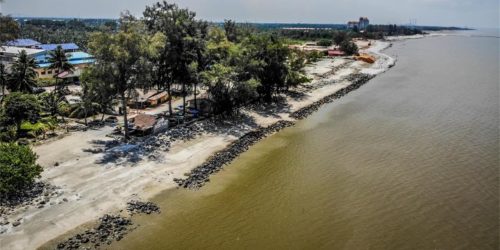
Ask any local in Selangor where to get the best ikan bakar or watch a sunset, and they’ll likely point you to Pantai Jeram. It’s a place where families have been coming for years to fly kites, dig for shellfish (kerang), and just enjoy the sea breeze.
But Pantai Jeram is also a vital “international pit stop.” It is part of a major global highway for birds called the East Asian-Australasian Flyway. Every year, between August and April, thousands of migratory birds—including the rare “Burung Botak” (Lesser Adjutant)—fly thousands of kilometers from as far as Siberia to rest and feed on these mudflats. For the community, the beach is the heart of local seafood and tourism; for these birds, it is a matter of survival.
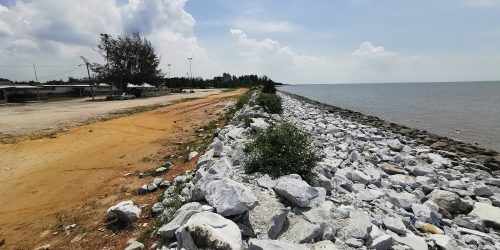
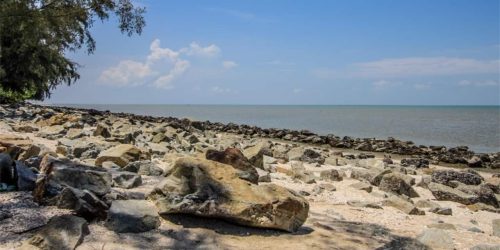
The huge weekend crowds leave behind a mountain of plastic bottles, food wrappers, and containers. To stop the coast from washing away, the government installed big rock barriers, but these have accidentally turned into “trash traps.” When people litter, the wind and waves push the rubbish deep into the gaps between these rocks where it gets stuck and rots.
This is a literal life-or-death issue for the migratory birds. They fly here to refuel, but instead of clean food, they are surrounded by plastic. When this waste breaks down into microplastics, it enters the mud and the food chain. The birds (and the seafood we eat) end up consuming these plastics, which weakens them and makes it much harder for them to survive their long journey home.